
The Minnesota Warrant System
Minnesota has no single public site that lists every active warrant by name. A District Court judge issues a court warrant. County court administration keeps the case record. A sheriff or another officer authorized by law serves it. A separate criminal-justice channel gives approved users statewide access to certain warrant data. Those roles touch the same case, yet they are not one database or one public service. The unified District Court tries criminal, traffic, family, juvenile, and city-ordinance cases, with county venues across ten judicial districts. Appeals go to the Court of Appeals and the Minnesota Supreme Court, which review rather than issue routine trial warrants. The sheriff serves warrants but never issues them and never replaces the clerk. For the office that actually holds a Minnesota case, the county directory routes you to its court administration and sheriff.
Minnesota’s Restricted Warrant File
Minn. Stat. §299C.115 requires every county to make its outstanding adult and juvenile felony, gross-misdemeanor, and misdemeanor warrant data accessible to users of the Criminal Justice Data Communications Network (CJDN). Approved users reach it through the BCA warrant file or a single query to that file. The statute set this statewide mandate on January 1, 1996. It builds an authorized law-enforcement channel for Minnesota, not a public name search. The categories promise no public display of every citation, ordinance matter, civil process, sealed record, or search warrant. The BCA file offers no public query fields. There is no statewide count and no published refresh interval. Reading §299C.115 as proof that every Minnesota warrant appears in MCRO or on a county page would be wrong.
Access rule: Minnesota’s statewide warrant-file mandate serves authorized criminal-justice users. It does not create a public statewide warrant lookup.
Note: Minnesota's statutory coverage serves authorized users only, so it guarantees no public result for any individual case.
Statewide Warrant Databases
Minnesota splits its warrant information by audience. The public gets court case search. Criminal-justice agencies work through restricted data connections. A Department of Corrections fugitive program stands apart from both, and it does not publish every Minnesota warrant.
| System | What It Holds | Run By |
|---|---|---|
| BCA warrant file / CJDN access | Specified outstanding warrant data for authorized criminal-justice users | Minnesota DPS Bureau of Criminal Apprehension |
| Minnesota Court Records Online (MCRO) | Public court case information and, where available, case-specific warrant details | Minnesota Judicial Branch |
| DOC Wanted Fugitives | Curated community-supervision fugitive program | Minnesota Department of Corrections |
The BCA supports criminal-justice information services but posts no general public warrant roster. MCRO is a public case search. The DOC's Wanted Fugitives program covers a limited supervision population and replaces neither channel. Note: these Minnesota channels differ by audience and coverage, so a search in one does not settle what another shows.
Minnesota Warrant Records in MCRO
MCRO took over from Minnesota Public Access Remote (MPA Remote) on April 17, 2023. It offers a statewide public case search by name, case number, citation, or attorney. A party-level active-warrant flag or a case-specific Warrants section may appear. That is case access, not a list of every active warrant. What shows up depends on the file, public-access rules, and remote availability. Some pending criminal, traffic, or petty-misdemeanor matters may not return in a name search before conviction. Juvenile, sealed, private, and confidential data carry further limits. Search warrants do not appear as ordinary online MCRO case documents in the published guidance; the public route for those is a courthouse Minnesota Public Access Court Records terminal. A blank MCRO result never proves that no Minnesota warrant exists.
How a County Warrant Enters the Statewide System
A Minnesota criminal case starts when a prosecutor or officer brings a complaint and supporting material to a District Court judge. Under Rule 3.01 of the Minnesota Rules of Criminal Procedure, the judge reviews probable cause. A summons is the default unless the rule supports a warrant. The county case file stays with Court Administration. A sheriff, police officer, or other authorized peace officer may then execute the warrant.
Warrant flow: District Court judge issues order › County Court Administration keeps the case file › sheriff or authorized officer serves it › approved agencies query the specified BCA/CJDN data.
Those duties are separate, and nothing in them promises instant or automatic updates. The Judicial Branch documents an authenticated warrant-status integration that lets agencies send case-status changes back to court systems. That service serves agencies and integrators. It is not an individual lookup. After an arrest, recall, or other status change, confirm the current court record and sheriff information with the Minnesota county holding the case. Note: the integration describes agency-to-court status reporting for Minnesota, not a public search portal.
US Marshals and Fugitive Warrants in Minnesota
Federal warrants travel their own route. The U.S. District Court for the District of Minnesota is the federal trial court, and the U.S. Marshals Service executes its orders. The district also runs the North Star Fugitive Task Force, a USMS-led partnership of federal, state, county, and local agencies. Federal cases never show up in MCRO, Minnesota's public court system. A no-result there clears nothing at the federal level. The two systems do not share records. The District of Minnesota's official homepage identifies the federal court and lays out its public case resources, which sit apart from any Minnesota county warrant search.
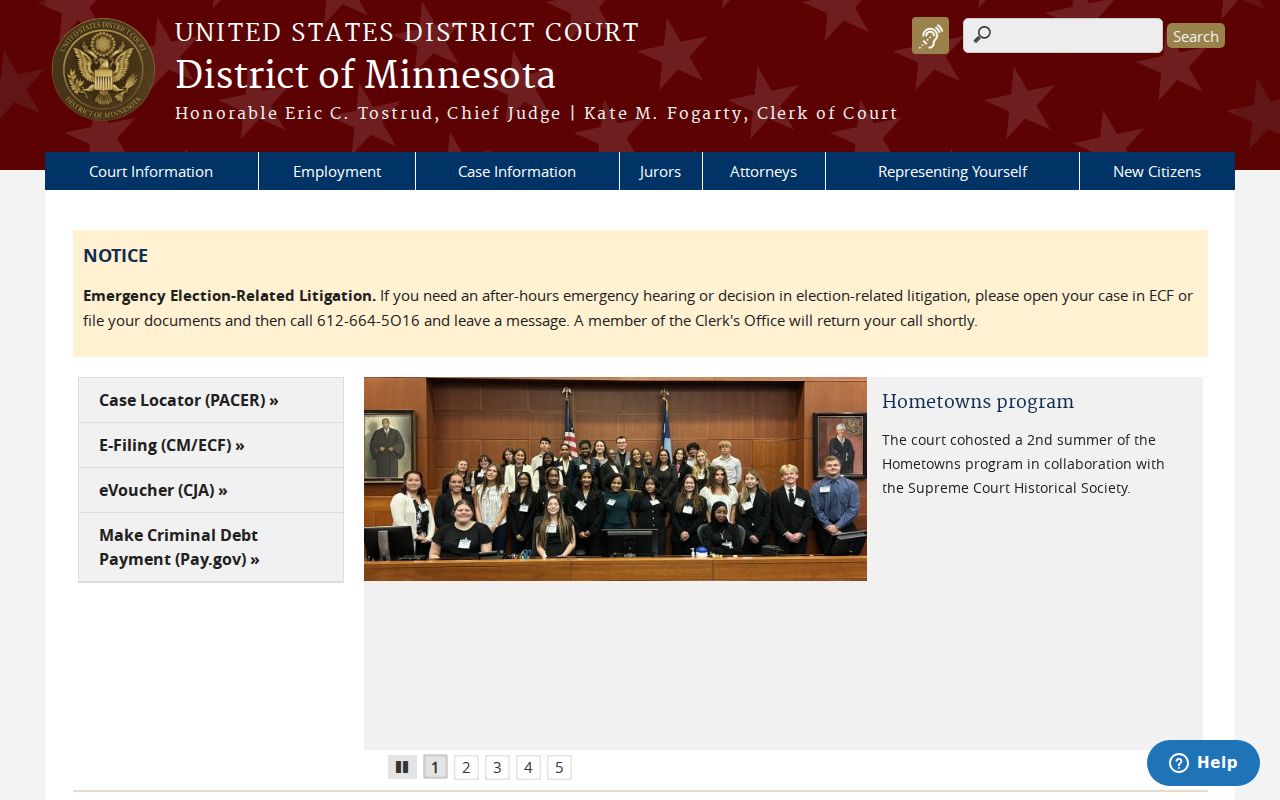
Federal dockets and Minnesota county warrant records answer to different issuing authorities, public access rules, and service agencies. The PACER landing page opens the separate public docket-search route. It can display public case entries, not sealed warrant material.
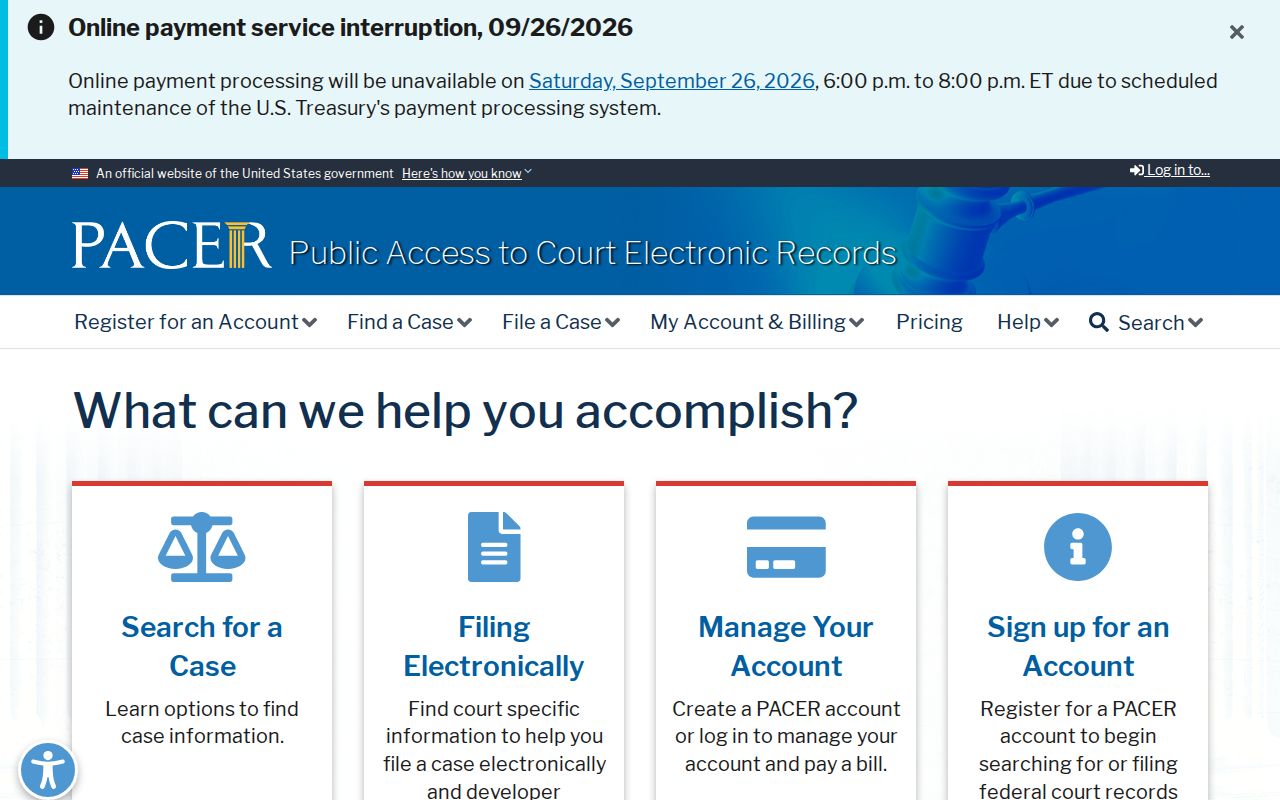
PACER remains a docket tool rather than a public warrant roster in Minnesota or anywhere else, and it does not confirm every federal warrant.
Minnesota’s North Star Warrant Task Force
The North Star Fugitive Task Force is a U.S. Marshals-led partnership of federal, state, county, and local law-enforcement agencies. It coordinates fugitive work across jurisdictions. It is not a public list of people. It is not a Minnesota warrant search service either. A Minnesota county warrant can pull in agencies far from the county where it was issued, while federal cases run on their own court records and service process. Facing an active federal warrant, or planning a surrender? Talk to counsel and the issuing federal jurisdiction. For a state case, contact the County Court Administration and the sheriff connected to the file. The official U.S. Marshals District of Minnesota page describes the task force without posting a complete public roster. It cannot confirm warrant status for a member of the public in Minnesota.
Statewide System vs County Warrant List
A statewide query and a county page answer different questions. Minnesota's BCA/CJDN channel is restricted to authorized users. It covers only the warrant categories set in law. A sheriff's public county page, if one exists, is just a local display. To actually confirm a warrant, the court's own case record and the issuing sheriff remain the practical stops.
| Feature | Statewide BCA/CJDN Channel | County Court and Sheriff |
|---|---|---|
| Audience | Authorized criminal-justice network users | Public case access and local status questions |
| Coverage | Specified warrant data under §299C.115 | The court file and local service information for that county |
| Public search | No public name lookup | MCRO case search; county sheriff methods vary |
| Record of record | Restricted information path | Issuing District Court file and sheriff’s service status |
County sheriff portals differ from county to county. None of them is statewide. Use the 87-county directory to pick the place that filed the case. Then ask Court Administration about the docket. Ask the Sheriff's Office about service or surrender steps. Public county pages vary in coverage, and many Minnesota sheriffs route warrant questions to local court and office staff.
Minnesota BCA Warrant Role
The Bureau of Criminal Apprehension is part of Minnesota's Department of Public Safety. It runs criminal-history and criminal-justice information infrastructure. It also supports the BCA warrant-file connection required for authorized network access. But BCA does not issue court warrants. It publishes no general public Minnesota warrant roster. Its public-facing data request route is not a person-by-person warrant confirmation service.
Minnesota Bureau of Criminal Apprehension
The BCA supports criminal-justice data and the restricted statewide warrant connection. It is not a public warrant-search portal.
A public-data request to BCA under Chapter 13 does not override data classifications. Minnesota's integrated-search provision, Minn. Stat. §13.873, limits access to authorized users, and Minn. Stat. §13.82 treats active-arrest-warrant information as confidential until its statutory release event, unless disclosure is authorized as a public purpose. Neither statute creates public self-service access. The official BCA information page describes the agency. It does not describe a person's warrant status. The BCA's Public Government Data Request form is a records request, not a warrant lookup.
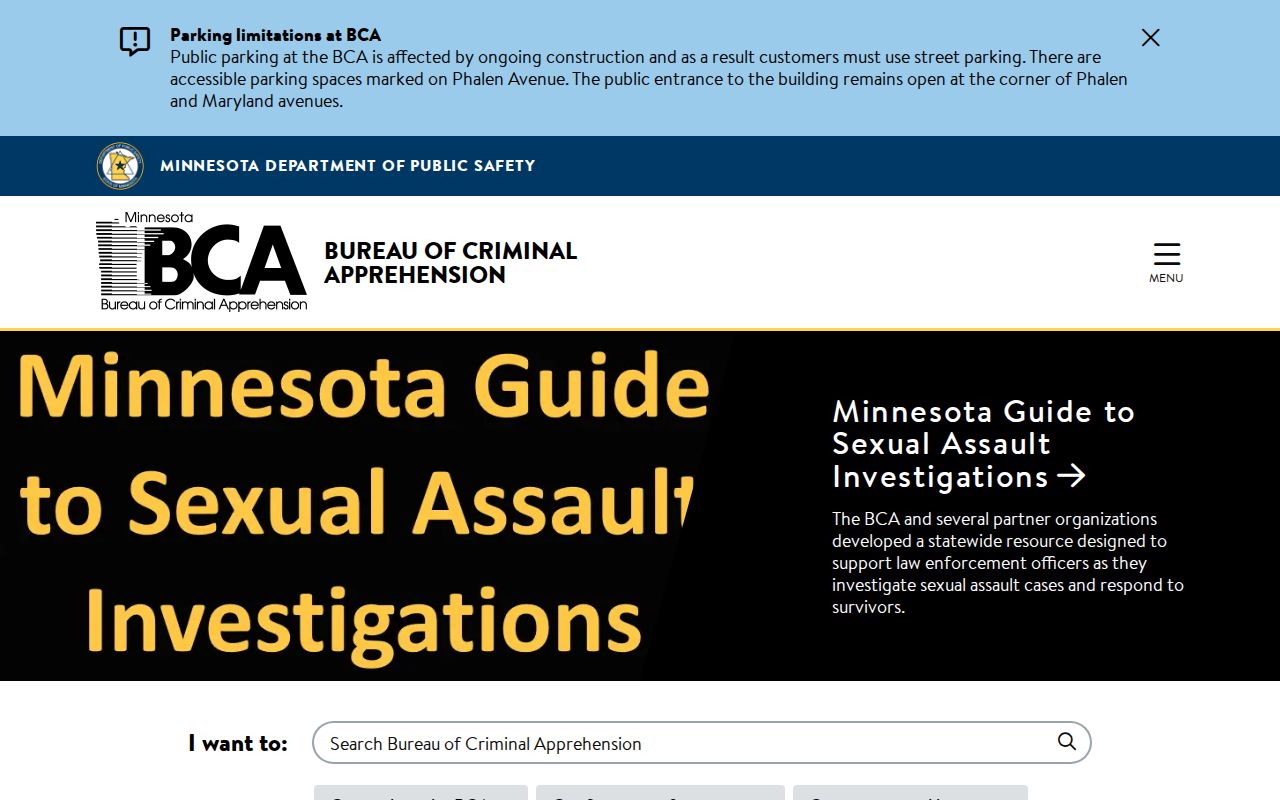
Use BCA information to understand Minnesota's statewide agency layer. Use the court and sheriff in the relevant county to confirm a case.
Minnesota Warrant System Timeline
Minnesota's public and restricted channels grew on different tracks. That history matters. It explains why a modern statewide court portal still fails as a complete public warrant search. The law-enforcement network has a statutory access mandate. The Judicial Branch opens many court records under separate rules, and neither channel replaces the county file or the sheriff's current service information.
- January 1, 1996: Minn. Stat. §299C.115’s county warrant-data access mandate for authorized criminal-justice network users begins.
- April 17, 2023: MCRO replaces Minnesota Public Access Remote as the public court-record search.
- August 26, 2025: the current Rules of Public Access to Judicial Branch Records take effect.
- July 1, 2026: the current Minnesota Rules of Criminal Procedure version takes effect after amendments.
These dates mark public milestones. They are not a database refresh schedule. The BCA does not publish its warrant file's original electronic launch date, a batch-update cycle, or a statewide warrant total. So do not gauge how recently a Minnesota record changed from the system's age or a portal redesign date. Older platform, newer entry: the two can coexist. Note: these dates describe access and court-platform milestones in Minnesota, not the refresh timing of individual warrant records.
Warrant-System History and Technology
MCRO is the public side of the Minnesota court system's records. It lets anyone run name, case, citation, and attorney searches, and it opens many public case files from home. But it is not a warrant list. The law-enforcement warrant query sits behind it, restricted, and that channel only lets agencies push status changes back into court systems. An ordinary person cannot query a name there. Minnesota Judicial Branch rules walk alongside this split. The Judicial Branch current rules page posts the public-access and criminal-procedure rules with their effective dates. For a search warrant, published court guidance sends you to public access terminals at the courthouse, not to an ordinary MCRO document. That is the practical history in one line: digital case access for the public grew wide, while warrant visibility stayed narrow, so local confirmation in Minnesota still does the real work.
Minnesota Warrant Search Limits
A blank result proves nothing. A Minnesota case may sit pending, sealed, juvenile, restricted, newly changed, or simply outside what the online name search can see. The BCA and CJDN channel takes no public name entry. A county sheriff may run a local warrant search, or may not. MCRO is a case portal, not an all-warrant roster. Every gap has its own reason, so one quiet screen never means statewide coverage. The right sequence is simpler than it looks. Use MCRO to spot a public case if one shows. Then ask County Court Administration for the current file, and the county sheriff for service, surrender, and bond logistics. A federal record belongs in federal court with counsel, not in MCRO. The Minnesota county directory points to the local office that actually holds the warrant and can explain its status.
Check locally: A Minnesota public case-search result is a starting point. Confirm any suspected warrant with the issuing court and the sheriff that serves it.