
Active Warrants in Minnesota
Minnesota keeps no single public search that covers every active warrant in the state. The closest public tool is the Minnesota Court Records Online system, MCRO, which searches District Court case files. On a party record it may show an active-warrant flag, and inside a case it may show a Warrants section. It is a case index, though, not an all-warrant roster. Law enforcement works from a different source. The Minnesota Bureau of Criminal Apprehension (BCA) maintains a warrant file that only authorized users of the criminal-justice network can query, under Minnesota Statutes section 299C.115. An active or outstanding warrant is one that remains executable and has not been served or recalled, and that status belongs with the Minnesota District Court that issued it and the county agency responsible for execution. The state publishes no uniform public status code list, and remote case details may lag behind a court or sheriff update.
Note: In Minnesota, the terms active and outstanding should be checked against the current court and law-enforcement status.
Why Minnesota Has No Public Active-Warrant Roster
Minnesota does have a statewide layer for warrant visibility. It just is not public self-service. Section 299C.115 requires every county to make specified outstanding adult and juvenile felony, gross-misdemeanor, and misdemeanor warrant data accessible to users of the criminal-justice data communications network. Counties meet that duty through the BCA warrant file or a single query to it. The statute builds no public portal around the data. There are no public search fields, no result view, no roster count, and no refresh schedule. MCRO serves a different purpose. It lets the public search many District Court case records remotely, subject to access limits. The Minnesota Department of Corrections adds its Wanted Fugitives program, a curated supervision-fugitive resource. These three channels do not combine into one answer. Authorized network data, a public court case view, and a limited program list each cover different ground.
| Channel | What it may show | What it cannot establish |
|---|---|---|
| BCA/CJDN warrant file | Specified outstanding warrant data for authorized criminal-justice users. | A public name search or complete public field list. |
| MCRO | Public District Court case details and a warrant flag or section when available. | Every active warrant or every restricted case. |
| DOC Wanted Fugitives | A curated supervision-fugitive program. | All Minnesota warrants, counties, or criminal cases. |
How Statewide Active-Warrant Data Works
For Minnesota law-enforcement users, county warrant data flows through the restricted BCA and CJDN connection. That network access is separate from the public MCRO search. The state publishes no refresh cadence for a public index, no list population figure, and no shared status vocabulary. County sheriff pages vary just as much. Some post a search form for their own records. Others point visitors to court and sheriff contact channels instead. The state sets no roster participation count either. On the public side, MCRO can show file number, court location, status, charge, events, bond details, and a Warrants section when the specific record is accessible. A county sheriff's search may be more local, but it does not reach other counties and may not display every case field.
Note: Minnesota publishes no public warrant-list refresh schedule, so absence from a statewide index or county list is not proof that no warrant exists.
Minnesota’s 1996 Active-Warrant Data Law
Since January 1, 1996, Minnesota Statutes section 299C.115 has required county access to outstanding felony, gross-misdemeanor, and misdemeanor warrant data for criminal-justice network users. The statute supports authorized law-enforcement visibility. It does not open the BCA warrant file to the general public. It also does not promise that every local citation, ordinance matter, sealed case, civil matter, or search warrant will appear in a public court search. The Minnesota Bureau of Criminal Apprehension public information page describes the BCA's data role and its public-data request process. The agency issues no court warrants and offers no public name lookup for its warrant file. A request reaches only public data the BCA holds, after classification review.
The agency's infrastructure role in Minnesota stays separate from a county court's authority to issue or recall a warrant.
What an Active Warrant Shows
A Minnesota public court record can carry details that identify the file, but there is no standardized statewide warrant row. The Judicial Branch case-detail handout documents the fields that may appear. Availability depends on the case and on public-access rules. The fields describe the schema only. No person, case number, charge, bond value, or warrant entry is guaranteed to appear in any given record.
| Warrant identifier | No distinct statewide public warrant-number format was confirmed. Court file numbers are separate; a format-only example is CC-CR-YY-sequence. |
|---|---|
| Case and location | File number, case title or type, filing date, and District Court location may appear. |
| Judicial officer | A judicial officer may appear in case details; a warrant-specific signer is not guaranteed as a separate field. |
| Party and charge | Party information and charge or offense may be shown subject to public-access limits. |
| Charge classification | Charge details may appear, but no standard statewide warrant-list classification field was found. |
| Warrant section | A case-specific Warrants section or party-level active-warrant flag may appear; check it against the correct case. |
| Events and bond | Hearing or event history and bond amount, status, or date may be available when entered. |
| Serving agency | MCRO does not establish a standard public field identifying the agency that will execute the warrant. |
| Status and date | No common public active, served, or recalled code list or statewide refresh date was found. |
Read the Register of Actions and the specific Warrants section, not just the party flag. Then ask the issuing Minnesota county to confirm the present status before you rely on the record.
Minnesota County Warrant Searches Stay Local
Minnesota keeps warrant searching local. There is no shared statewide county-roster interface, so each sheriff's page, where one exists, covers only that county's published records. One county may offer a name and date-of-birth form. Another sends you to Court Administration or to the sheriff's warrant unit by phone or in person. Minnesota also has no separate municipal or JP court tier, since city citations are filed as District Court cases. Expect local quirks too. A form may omit result fields, list limits, export options, or update timing, so its presence is not a promise of statewide coverage. Dakota County's official form accepts at least a last name, first name, or date of birth, and it carries a confirmation caution for law-enforcement users. Hennepin County pairs court and warrant-help routes with sheriff instructions. Those are local examples, not Minnesota-wide rules. Use the county directory to reach the filing court and sheriff. The Dakota County Sheriff warrant-search page shows one local form in action.
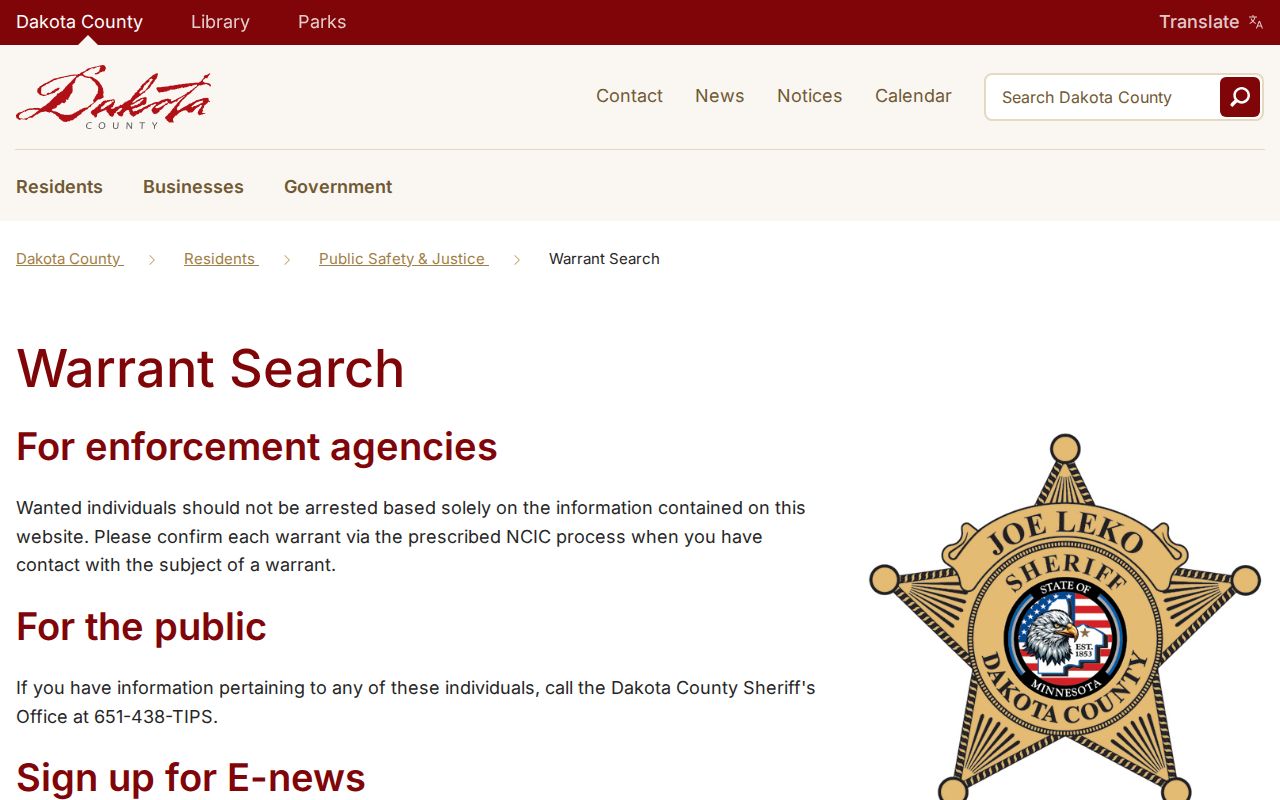
A county form covers only its own published entries in Minnesota. It is not a statewide result. The Dakota County data-practices page shows a request route when a local online search falls short.
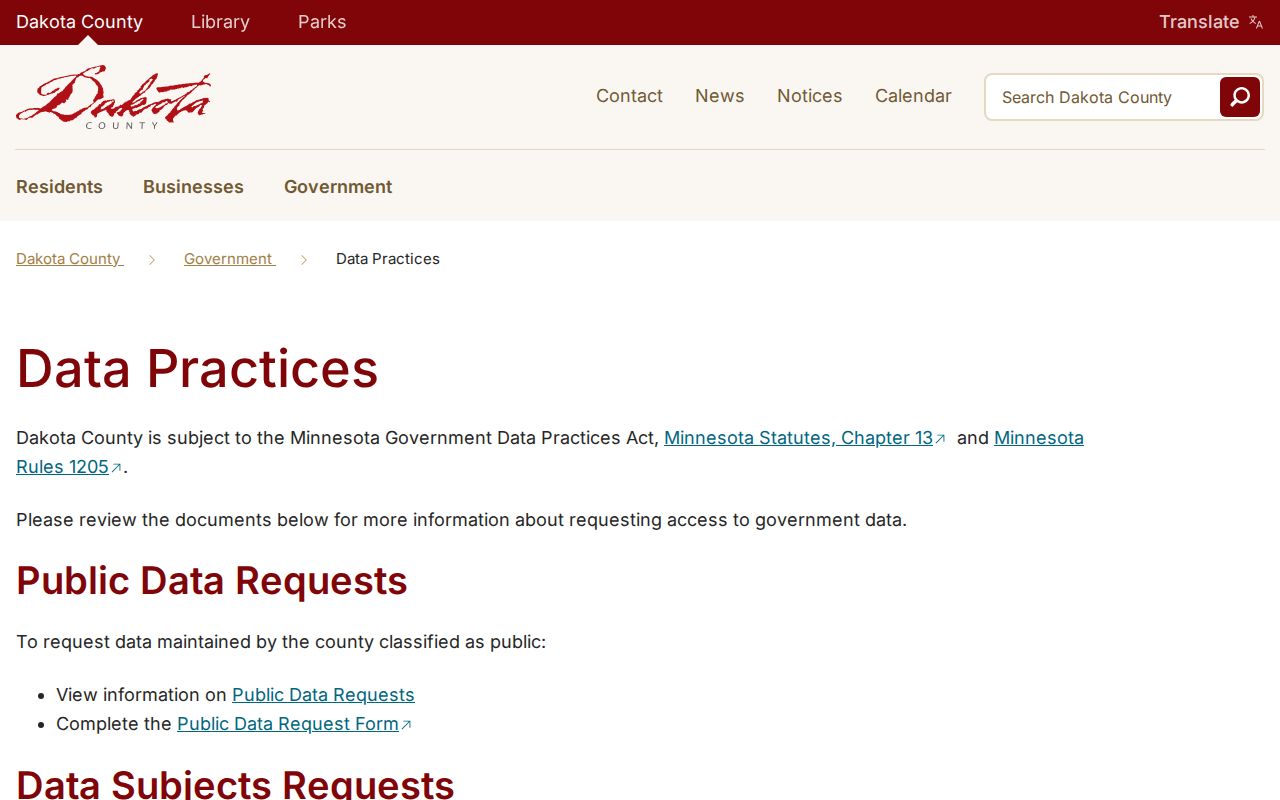
What each office holds, and how you ask for it, varies by county in Minnesota. Court Administration is the route for a case file. The sheriff or jail handles surrender. A focused Minnesota Government Data Practices Act request can seek existing public data, though classification rules apply and an agency need not build a new list. Note: A county list may be absent, incomplete, or dated, so the issuing court and sheriff remain the confirmation points.
Most-Wanted Lists and Roundups
Minnesota's public wanted-fugitive material centers on a Department of Corrections program. It lists people under community supervision who allegedly violated release terms and then evaded supervision. That curated list is narrow. It is not a full active-warrant search, a public BCA index, or a catalogue of every county case. It cannot confirm your own court status. Minnesota has no statewide public roster of every active warrant.
Key Point: The official Minnesota DOC Wanted Fugitives program exists only for its supervision-fugitive purpose. Its page is no substitute for checking a Minnesota court file.
The DOC page routes public tips to official channels and warns against approaching anyone. Have a question about your own warrant? Contact the Minnesota court or a lawyer rather than filing an anonymous tip about yourself. The Minnesota most-wanted program page explains that program's scope. The Minnesota DOC page carries the official public information.
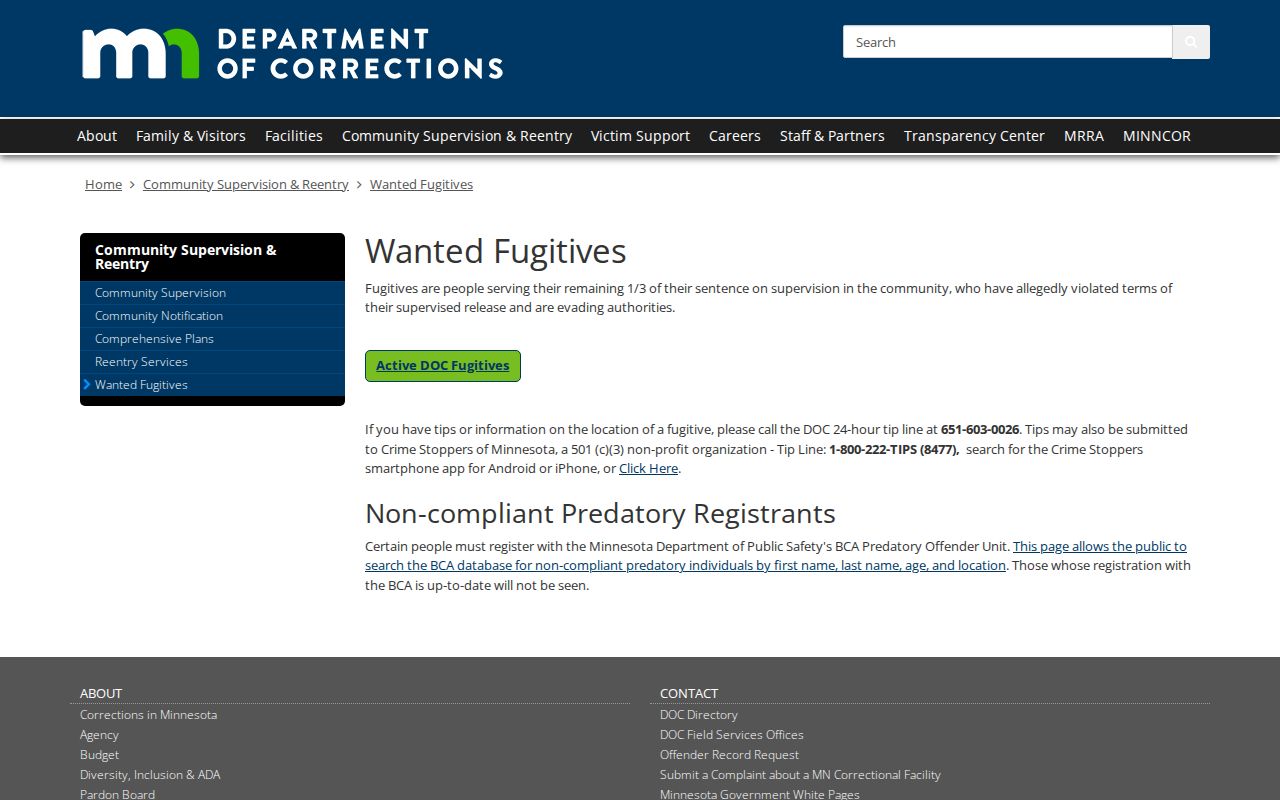
The official program serves one narrow supervision purpose in Minnesota, not a statewide warrant list.
Minnesota MCRO Warrant Flags
MCRO searches cases across all 87 Minnesota counties. Where a record is available, it may show a warrant flag or case-specific warrant details. A missing case or flag does not prove there is no warrant. Some name results are withheld. Pending criminal, traffic, and petty-misdemeanor matters may stay hidden before conviction, and juvenile, sealed, and restricted records carry their own limits in Minnesota. Search by case or citation number when you can. Then ask the issuing court to verify the file. An active-warrant flag can also belong to a different case for the same person, so check the case number, the court location, and the Register of Actions before drawing a conclusion about a Minnesota matter. The official MCRO access overview describes the public case search and its remote-access limits.
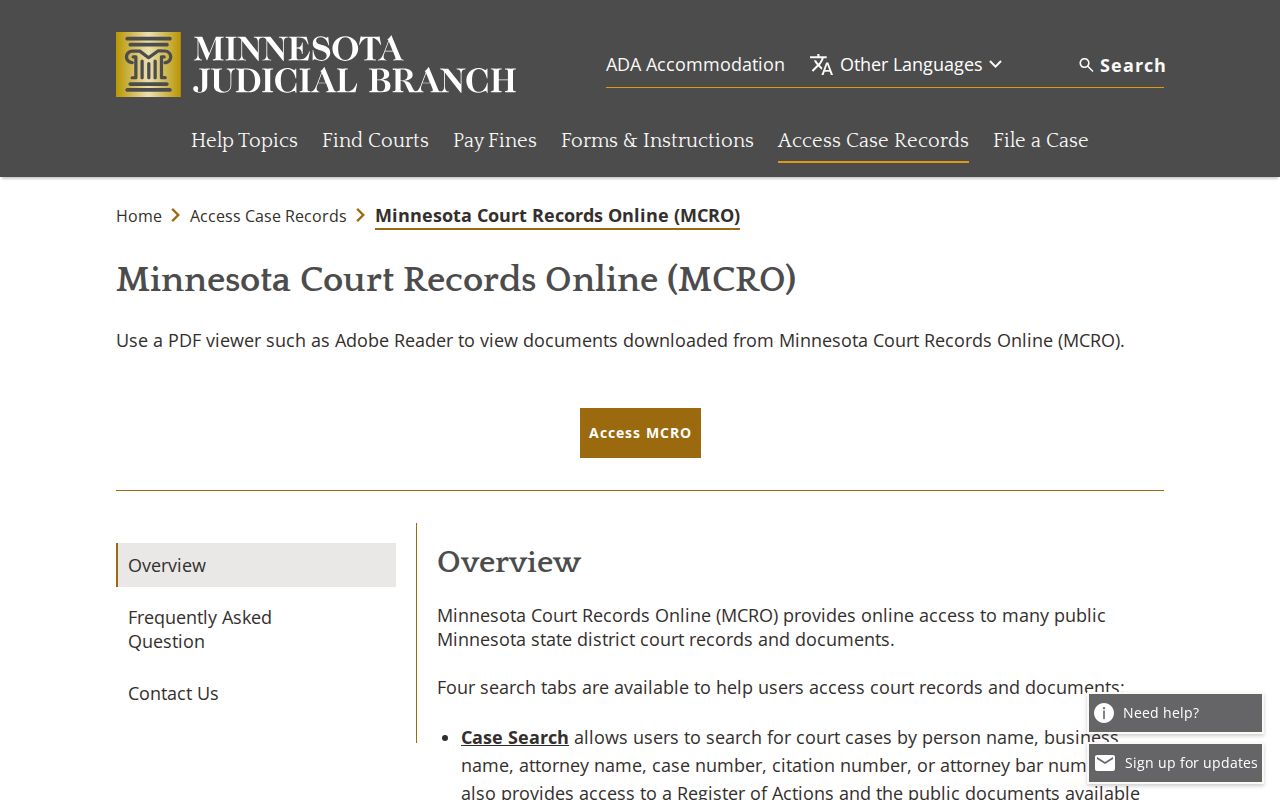
MCRO's public case view is an unofficial access point. It may lack information available only through the issuing court or a law-enforcement system in Minnesota.
If Your Name Is on a List
First, identify the issuing court and the case. A Minnesota record that seems to concern you or a family member is only a starting point. MCRO can locate a publicly available file. A name match alone is not final confirmation. Call that Minnesota county's District Court Administration. Ask whether the warrant is still active, what action is needed, whether a hearing can be set, and what bond terms apply. The sheriff or jail handles surrender and payment. A Minnesota lawyer can advise on a hearing, a recall request, or an arranged appearance. A scheduled date or payment does not itself prove the warrant was recalled. After the court acts, confirm it in the case record and with local law enforcement. Use the county directory to find your Minnesota county.
Important: A Minnesota active warrant can lead to arrest when law enforcement encounters you; ask a lawyer and the issuing county about a safe, court-directed next step.
Minnesota Active Warrants and Public-Access Limits
Minnesota law keeps some arrest-warrant-index data confidential. Under Minnesota Statutes section 13.82, subdivision 19, law-enforcement warrant-index data stays closed until the person is in custody, the warrant is served, or the person appears before the court, unless disclosure is found to serve a public purpose. That rule is why an authorized law-enforcement view never becomes a public name search. Other records have their own walls. Juvenile delinquency records are generally private under section 260B.171, subject to exceptions. Judicial case data follows separate access categories. If MCRO shows nothing, ask Court Administration. Court staff can point you to the correct case access path. For agency-held public data, send a focused Minnesota Government Data Practices Act request to the BCA or the county agency. None of these channels builds a complete public active-warrant roster for Minnesota. No such roster exists.
Note: A restricted BCA/CJDN entry, a public MCRO case, and a county sheriff page have different access rules and should not be treated as interchangeable records.