
The Minnesota Most Wanted Program
The state-run fugitive program in Minnesota comes from the Department of Corrections, not the Bureau of Criminal Apprehension. The Minnesota DOC Wanted Fugitives program tracks people under community supervision who are accused of breaking release terms and dodging their supervising officers. That narrow focus matters. It is a curated program, not a directory of every person holding a court warrant in Minnesota. Checking it is not a substitute for looking into a case that touches you or a family member.
Minnesota DOC Wanted Fugitives
The official page explains the supervision-fugitive program and directs tips to DOC’s published channels. It does not represent every Minnesota warrant.
For the program's exact scope and tip contacts, the DOC program information is the place to look. That official page carries the agency's own context on how the fugitive program works in Minnesota.
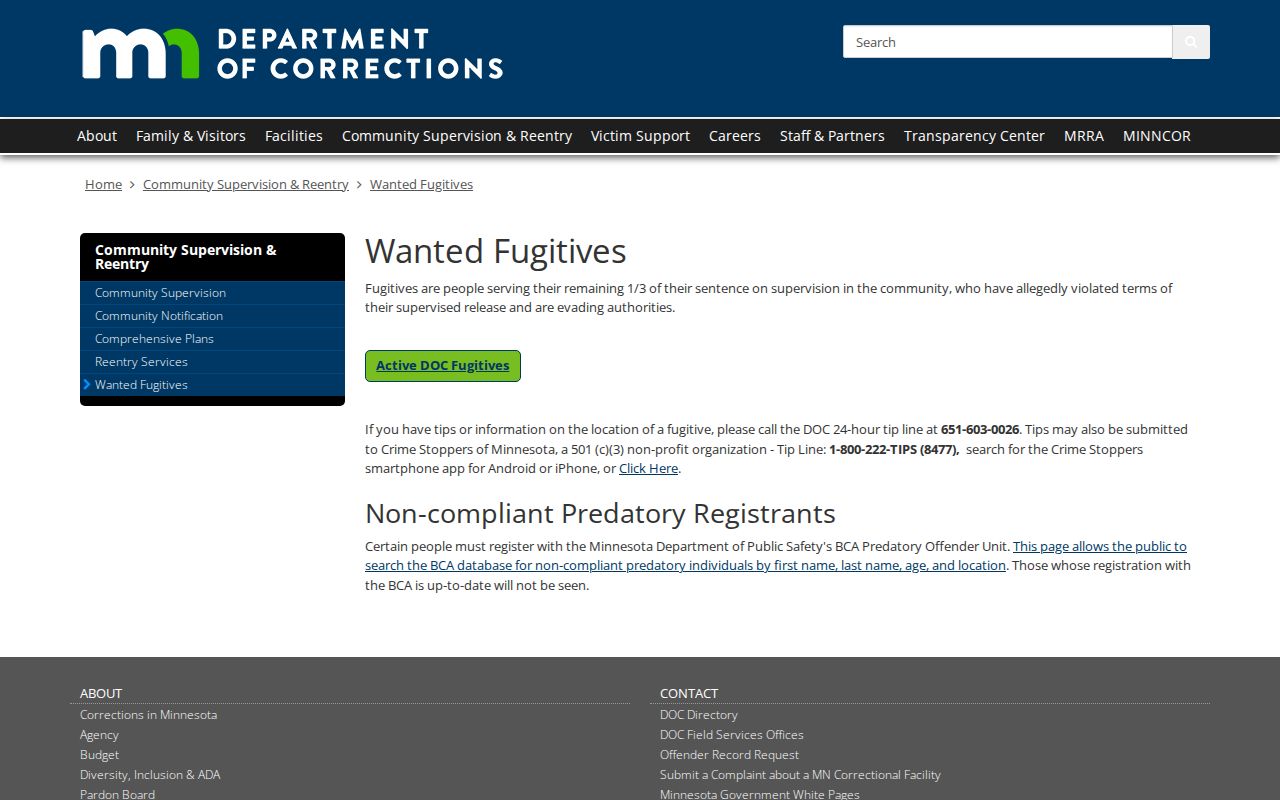
Follow the current instructions on the official program page. A name appearing on the Minnesota DOC page, or absent from it, tells you nothing about a separate county warrant being active.
Minnesota DOC Wanted Fugitives
The DOC program covers less ground than the phrase most wanted suggests. Its focus is people on community supervision who allegedly violated supervised-release terms and are evading supervision. A court warrant may exist alongside the listing. The program does not claim to show every such order, though. A traffic, bench, or arrest warrant can fall entirely outside this curated program, and a Minnesota resident can face a court matter even when the DOC viewer returns no result. The viewer's availability can change, and the DOC does not publish a public count or update interval for it. Use the DOC's official landing page for current instructions. Skip stored copies, search-engine caches, and third-party reposts; none of them is a reliable way to read an entry. Whether a warrant exists is a question for the court that issued it, not for a reposted list.
Statewide vs County Most-Wanted Lists
Minnesota runs a state-level DOC program for supervision fugitives. County Sheriff's Offices work differently. Some publish local notices of their own, while others simply offer a phone number or an in-person route for questions. These county pages do not add up to one statewide roster. Each Minnesota county decides what to display, and one may post records that a neighboring county would instead route to its court and sheriff for confirmation.
| Feature | State DOC Program | County Sheriff Route |
|---|---|---|
| Scope | Curated community-supervision fugitives | Local notices or county warrant information, if published |
| What it proves | Not a complete warrant search | Not a statewide result or final court status |
| Tip or confirmation | Use DOC’s official tip channels | Follow that county’s official instructions |
| Where to start | DOC program page | Open the relevant county through the Minnesota county directory |
The county directory can connect you to the sheriff and court tied to the case. Not every sheriff publishes a searchable list in Minnesota. No local list covers all active warrants.
Minnesota’s Public Warrant Search Gap
Minnesota offers no public statewide active-warrant name search. Three channels get confused for one. The BCA warrant-file connection serves authorized criminal-justice network users under state law. Minnesota Court Records Online (MCRO) is a public case-search service, not an all-warrant roster. The DOC Wanted Fugitives program is a curated supervision page. Each tool serves a different user, and none can certify that a person has no warrant. A public case search may locate a court file. A county sheriff's list, where one exists, covers only that county's public display. The authorized BCA channel under Minn. Stat. §299C.115 is not a portal the public can query by name. With no single statewide roster, a missing result should push you toward the county tied to the case. Contact Court Administration or the Sheriff's Office there for a direct status check. A blank screen in Minnesota, in short, never rules out a warrant.
How to Report a Tip Safely
The DOC program posts a 24-hour tip line at 651-603-0026 and lists Crime Stoppers at 1-800-222-8477. Stick to channels that DOC or its official partner publish. Neither a reward amount nor an anonymity guarantee is promised here, so do not count on either unless the current official Minnesota instructions state it.
- Open the official DOC Wanted Fugitives page and follow its current tip instructions or call the DOC line.
- Give information to the agency through that channel; do not post identifying details or allegations on social media.
- Do not approach, follow, investigate, or try to detain anyone described in a public notice.
Key point: Send information through DOC or Crime Stoppers. Never contact or confront a person because of a fugitive notice.
Minnesota Warrant Tips Need Court Confirmation
A tip line serves one purpose: reporting what you know about a supervision fugitive to the Minnesota DOC. It is not a back door for asking whether you or a relative has a warrant. Anonymous channels were never meant for personal details or case questions. So keep the two tasks apart. Give a tip only when you actually hold information the agency can use, and turn to court records when you need an answer about a Minnesota case. Start with MCRO, searching by whatever details you have, then call the county District Court administrator to confirm the file and get instructions. The Judicial Branch's Find a Court directory and the Minnesota county directory will point you to the right court. If a warrant does surface, the Sheriff's Office or jail handles questions about service, surrender, and bond. A tip-line call never replaces that confirmation chain.
Most Wanted vs an Active Warrant
A most-wanted notice is publicity about a narrow slice of cases, while an active warrant is a court order that can exist whether or not anyone posts it anywhere. Minnesota's DOC program covers alleged supervision violations only. It is not a general warrant search. Someone absent from the list may still have an outstanding order, and only the issuing court can confirm one way or the other. That distinction should shape your next step. For the broader channels, see Minnesota active warrants, then check the specific county for the case and current warrant status. The notice itself says nothing about whether a warrant was served, recalled, or changed after the page last changed. Note: Online notices can shift after case action, so ask the issuing court and serving sheriff for current status.
Minnesota Warrant Context: North Star Task Force
The U.S. Marshals Service District of Minnesota runs the North Star Fugitive Task Force, a USMS-led partnership pulling in federal, state, county, and local law-enforcement agencies. It coordinates fugitive enforcement across those layers. It publishes no public wanted roster and offers no statewide county-warrant lookup. Its work sits apart from both the DOC supervision program and the Minnesota District Court case search, so a federal fugitive notice is never a substitute for checking a Minnesota county case. The official U.S. Marshals District of Minnesota page describes the district and the task force. Federal cases belong to the U.S. District Court for the District of Minnesota, not MCRO. Even PACER's public federal dockets are not a warrant roster, and sealed warrant material may simply not appear there.
U.S. Marshals District of Minnesota
The official district page describes federal fugitive operations and the North Star Fugitive Task Force as an agency partnership.
U.S. District Court, District of Minnesota
The federal trial court’s case docket and public access route are separate from Minnesota county warrant records and MCRO.
If You Believe You Are on a List
If a public notice might involve you or someone close to you, do not identify yourself through a tip line or push case details into an anonymous channel. Talk to a criminal-defense attorney first. Then use the official court and law-enforcement contacts to pin down the case, the issuing court, and where the warrant stands today. The Minnesota court file may carry access limits, and an online page can be incomplete or stale. For a Minnesota case, start with the court record and County Court Administration in the county where the matter was filed. The Sheriff's Office can explain warrant service, a planned surrender, and bond. The county directory routes you to those local contacts. Remember that a DOC notice is none of the following: a copy of a court order, a warrant status confirmation, or a safe-surrender arrangement.
Important: If a notice may concern you, contact a Minnesota criminal-defense lawyer and the issuing county court; do not rely on a roster as a status determination.
Confirm a Minnesota Warrant With the Court
When the question is your own case, public court search is the sensible first move. MCRO searches case information across Minnesota courts by name, case number, or citation, and it may show a party-level active-warrant flag or a case-specific Warrants section. It is not a complete warrant roster. Pending criminal, traffic, or petty-misdemeanor matters may not appear in a name search before conviction, and juvenile, sealed, or restricted information may be unavailable online. So treat any result as a lead, not an answer. Match what you find to the correct file, then call the District Court administrator in the county where the case was filed. Ask what the record means today and which step the court requires next. The county Sheriff's Office is the right office for execution, surrender, and bond logistics. What if the search comes back empty? If you have reason to believe a warrant exists, still check with the issuing county, because absence online does not prove an order is gone. That county-level step matters: Minnesota has no public statewide name search that returns a complete answer for all active warrants. The Minnesota county directory provides the local route. Note: Public access varies by case type and by current court-record availability, so direct confirmation still matters.