
How to Check for a Warrant in Minnesota
Begin a Minnesota warrant check with the public court-case search, but know its limits. That search does not reach the restricted BCA file. It also misses some active warrants. The issuing District Court holds the case record, so that is where a warrant entry ties back to. Sheriff's Offices differ from county to county: some post an online search, while others want a phone call. For a firm answer, contact the court and the law-enforcement office tied to the case.
- Search MCRO by name, case number, citation number, or attorney. A case or citation number can locate a matter missing from name results.
- Open the case register and Warrants section. Match the county and case because a party-level flag may refer to another file.
- Call the District Court’s County Court Administration where the case was filed. Ask about current status, bond or hearing terms, and the next step.
- Check that county Sheriff’s Office for an online warrant search or phone contact; not all counties publish a search.
- For a missing record, ask about courthouse access or submit a specific public-data request. Juvenile, sealed, or active law-enforcement data may be restricted.
- If confirmed, ask the court how to appear, surrender, post bond, or seek recall. Consider advice from a Minnesota attorney.
City tickets in Minnesota do not run through a separate municipal or justice-of-the-peace court. Those cases are heard in District Court. Use the county directory to locate the court and Sheriff's Office handling the matter.
Minnesota Warrant Search Starts in MCRO
The Minnesota Judicial Branch runs a free portal called MCRO for public case records. Search it by name, case number, citation, or attorney. Results can include the register, case events, bond details when the court makes them available, and a Warrants section for remotely accessible cases. Treat MCRO as a case portal, not a live index of active warrants, because the public cannot search the restricted BCA file by name. The search form takes an exact name or a wildcard after two characters, though "Sounds Like" cannot be combined with that wildcard. Refine with date of birth, filing date, county, case category, or status, all subject to court access limits. The blank form simply shows the statewide public case route until someone runs a search. Open the Minnesota MCRO form to see the page itself, then match any warrant entry to the correct case before drawing conclusions.
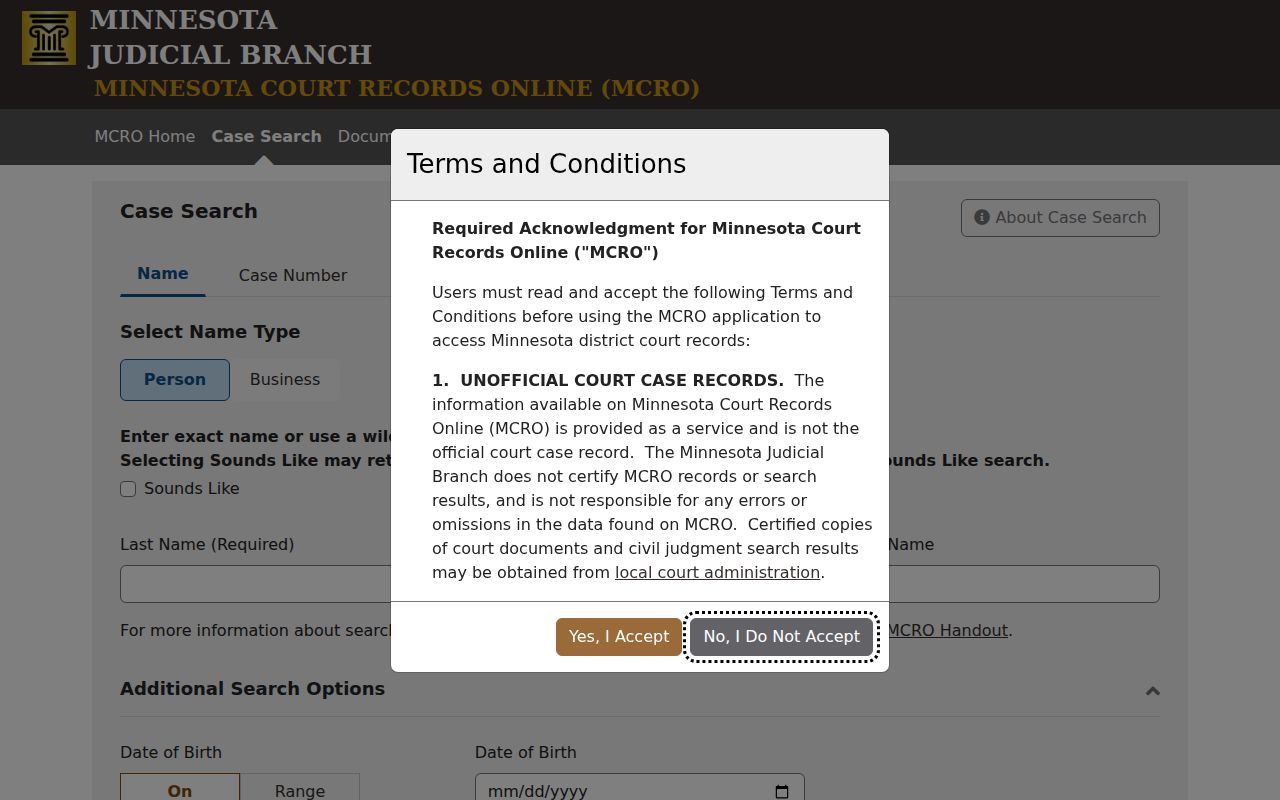
Minnesota's public court fields in MCRO leave out the BCA query that only authorized agencies can run.
| MCRO search route | Useful input | Limit to keep in mind |
|---|---|---|
| Name | Last name, optional first or middle name, date of birth | Some pending criminal, traffic, or petty-misdemeanor records are not returned remotely before conviction. |
| Case number | Minnesota court file number | Not necessarily a warrant number. |
| Citation | Number on the ticket | Locates many city and traffic cases in District Court. |
| Attorney | Attorney name or identifier | Finds connected cases, not warrants alone. |
| County or statewide | Select a court or statewide search | Narrows court results; it is not a warrant-index filter. |
Note: MCRO bars automated data mining, and a record unavailable remotely may not generate a notice to the person searching.
The Minnesota Statewide Warrant System
Authorized criminal-justice network users in Minnesota get statewide warrant-data access, but the public has no statewide active-warrant name search. Under Minn. Stat. §299C.115, each county must make defined outstanding warrant data available through the Bureau of Criminal Apprehension (BCA) warrant file or a single query to it. That statute connects agencies to each other. It does not open the file to the public. Nor does it promise that MCRO mirrors the same information. MCRO remains the public-facing court case system, and the Department of Public Safety's BCA, which maintains the state's criminal-justice information infrastructure, publishes no public warrant roster. One county Sheriff's Office may run its own online list while a neighbor county leans on Court Administration and phone confirmation. The Minnesota warrant system layers public, restricted, county, and federal access, and no single layer alone proves a warrant does or does not exist.
Minnesota Warrant Access Since 1996
Since January 1, 1996, Minnesota law has required counties to make specified outstanding adult and juvenile felony, gross-misdemeanor, and misdemeanor warrant data accessible to criminal-justice network users through the BCA file or a single query. That requirement is for agencies. It creates no public roster, no public search fields, and no refresh schedule. A District Court judge issues the warrant, County Court Administration keeps the case file, and authorized officers execute the order and update its status through systems the public cannot query. No public count of Minnesota warrants exists, and none runs on a real-time update schedule. Minnesota Statutes section 299C.115 sets the access rule, and the BCA describes its agency role there. Keep in mind that a restricted record may sit in front of an officer even when MCRO and the Sheriff's Office site return nothing.
Types of Warrants in Minnesota
Warrant types in Minnesota carry different legal weight. An arrest warrant follows a probable-cause review. A bench warrant ties to an existing case, often after a missed appearance. A search warrant authorizes a search and runs through a separate access path. A sign-and-release process sets a new date in limited cases and does not authorize arrest.
| Warrant Type | How It Arises | Who Issues It |
|---|---|---|
| Arrest warrant | A complaint and supporting facts establish probable cause, and rule conditions support a warrant rather than a summons. | District Court judge |
| Bench warrant | A missed required appearance or other court-order issue may lead to a warrant in the pending case. | Judge in the District Court case |
| Search warrant | A court order authorizes search or seizure, not arrest. | Judge under the applicable rule |
| Sign-and-release warrant | In a narrow eligible situation, an officer gives a new court date and obtains a signature; arrest is not authorized. | District Court process under Rule 3.01 and section 629.415 |
| Fugitive warrant | Another state or federal authority seeks a person under its process; extradition rules may apply. | Issuing state or federal court |
"Capias pro fine" is not a separate Minnesota municipal-court tier. A traffic failure-to-appear report to Driver and Vehicle Services is a license process, not a warrant. In child-support contempt, a magistrate may recommend a warrant, but a District Court judge decides whether to issue it. A label alone does not tell you whether an order remains active, so check the case register and ask the issuing court what action it requires. The sign-and-release process supplies a date under narrow rules and does not permit arrest on that order.
Minnesota City Tickets Reach District Court
Minnesota runs one District Court system across its ten judicial districts, with no separate municipal or justice-of-the-peace tier. A city officer can issue a citation, yet the case it creates, and any bench warrant that follows, belongs to District Court. Search MCRO by citation or case number first. Then contact County Court Administration about the file itself. City police may route a citation question, the court controls the warrant order, and the Sheriff's Office can explain execution or surrender procedures. The county directory points to the right court and Sheriff's Office. No separate city-court warrant portal exists in Minnesota.
What a Minnesota Warrant Record Shows
A public Minnesota case record can show its court file number, the case type and date, where it sits, its status, the charge, hearings, bond details, and a Warrants section. Access rules decide what you get to see. One caution: a party-level flag can point to a different case, so open that file's own warrant event before drawing anything from it.
| Court file number | Numbers generally combine county and case codes, year, and sequence, such as the format-only CC-CR-YY-sequence. It is not a confirmed warrant number. |
|---|---|
| Case and court | Public view may include the case title, type, date, and District Court location. |
| Charge and events | The register can list charges, hearings, and other court actions, subject to access limits. |
| Warrant information | A Warrants section or party-level flag may appear; neither is a complete Minnesota roster. |
| Bond | Case detail may show bond terms. Confirm current amount and method with Court Administration. |
| Serving agency | No public agency field or statewide status-code list was confirmed in the case schema. |
Minnesota courts share no statewide warrant-number format and no common status-code table. The court file number finds the case. It is not a unique warrant ID. When a record says "active," "served," or "recalled," ask that agency what the word means in its system.
Minnesota Warrant Terms in Plain English
Terms shift across Minnesota records. They do not always mean the same thing. A warrant flag, a court event, and a law-enforcement service status mark different steps in a case, so learn the vocabulary and ask the court holding the file a clear, specific question.
- Bench warrant
- A court order in a pending case, commonly issued after a missed appearance or failure to comply.
- Failure to appear
- Not coming to court when ordered. A judge may issue a warrant, and a traffic case may also trigger a separate DPS notice process.
- Sign-and-release warrant
- A narrow process that gives an eligible person a new court date; the form does not authorize arrest.
- Recall
- A court action withdrawing a warrant. A request or a scheduled hearing does not itself mean the judge has recalled it.
- Warrant flag
- A case or party indicator in MCRO that must be checked against the correct case’s Warrants section.
Minnesota courts do not use "capias," "capias pro fine," or "alias capias" as standard statewide terms. Warrants carry no automatic expiration. Old ones stay open. Time alone ends nothing. Verify an older warrant with the issuing court instead of assuming it lapsed. Note: a case number identifies the court file; Minnesota has no separate statewide public warrant number.
Public Access to Minnesota Warrant Records
Minnesota's Government Data Practices Act (MGDPA), chapter 13, governs public access to records that agencies hold. Court files are different. They follow the Judicial Branch's public-access rules. A data request cannot force out confidential warrant data or make an agency build a new list. Under section 13.82, subdivision 19, arrest-warrant-index data is generally confidential until custody, service, or a court appearance, subject to a public-purpose exception. Juvenile delinquency records are generally private under section 260B.171. Search warrants in Minnesota use a separate courthouse access route.
Minnesota access rules:
Minn. Stat. §13.03 covers public agency-data inspection and copying.
Section 13.82, subd. 19 limits access to arrest-warrant-index data.
Juvenile delinquency records have separate statutory protections.
Judicial Branch Rule 4 sets court-record access categories.
Ask Court Administration first. When a record is missing online, courthouse access may still work. For agency data, send the BCA or the Sheriff's Office a specific MGDPA request, though confidential material may be withheld.
Why Minnesota Warrant Records May Be Missing
An empty Minnesota search does not settle warrant status. MCRO is public case access, not the restricted BCA query, and county Sheriff's searches vary from one county to the next. Some matters stay offline. Pending, juvenile, sealed, and confidential cases often have no remote copy. Read the flags with care. MCRO guidance from the Minnesota Judicial Branch describes public case access, not a complete history, and a party-level flag can point to another file, so check the case register and its Warrants section. Search-warrant files may require a courthouse MNPAC terminal. For a city citation, search by citation number or call County Court Administration. A Sheriff's Office without a public search can still explain phone or records-request options. The public case-record access page from the Minnesota Judicial Branch maps the statewide court-search route, and it does not replace the issuing county's confirmation.
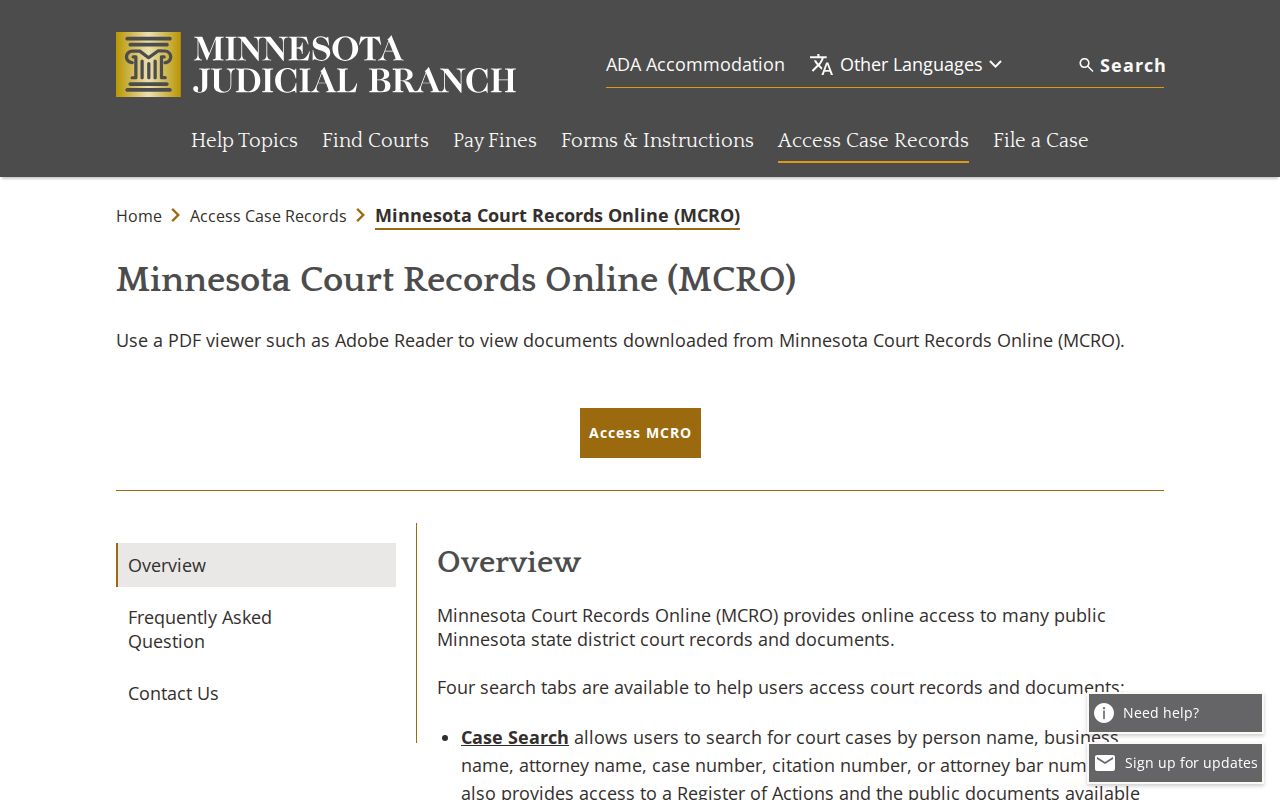
A blank Minnesota search or missing document is an access limit. Follow it up with the court, because it is not proof that no warrant exists.
Resolve a Minnesota Warrant Safely
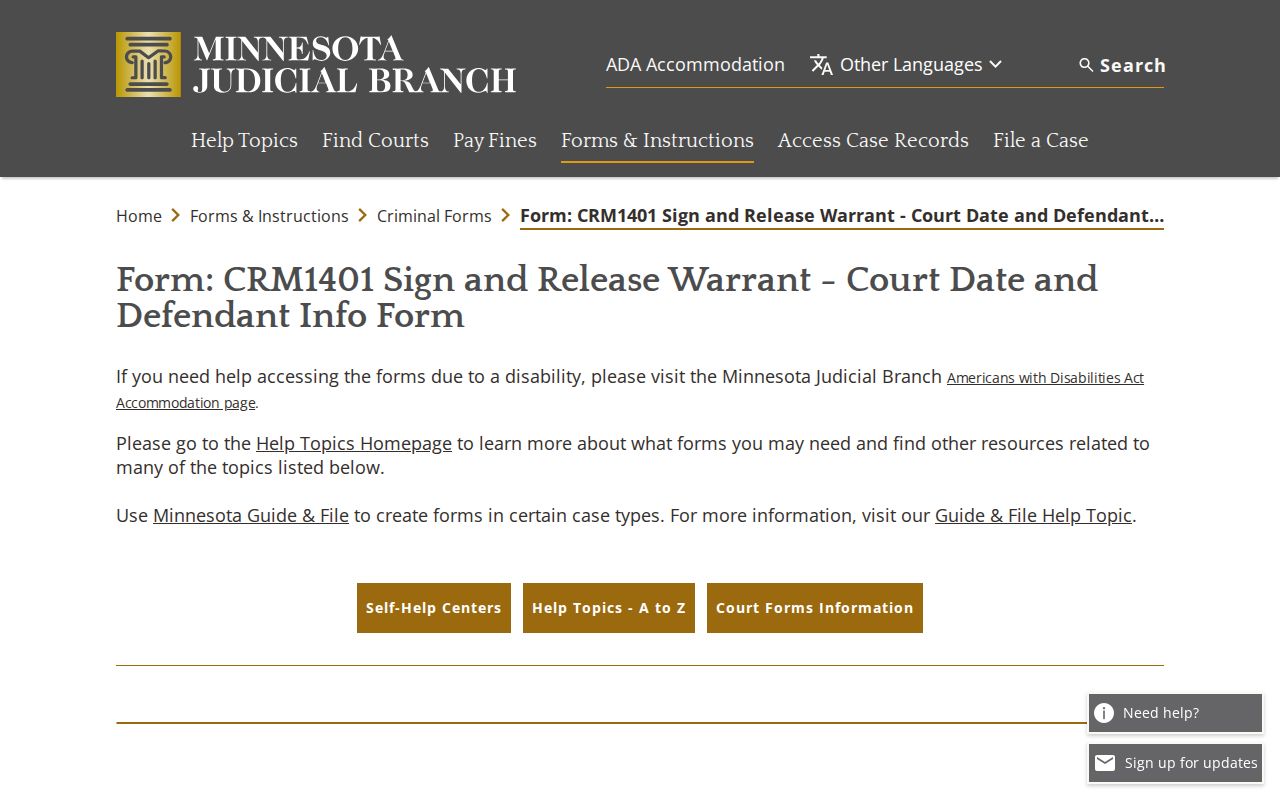
See a warrant flag on a Minnesota case? Confirm the case with County Court Administration first. Ask what court appearance, motion, or bond terms apply. A lawyer can request a hearing or a recall, but only a court order changes the warrant. Before you appear or surrender, confirm the county's intake location, hours, identification, bond type, and payment method. Minnesota has no statewide surrender counter. Bond can secure release without ending the case. Keep the receipt. Then confirm the warrant status with both the court and the Sheriff's Office. The Minnesota sign-and-release form covers a limited officer process after some missed appearances: it sets a new date, is not a recall request, and does not authorize arrest.
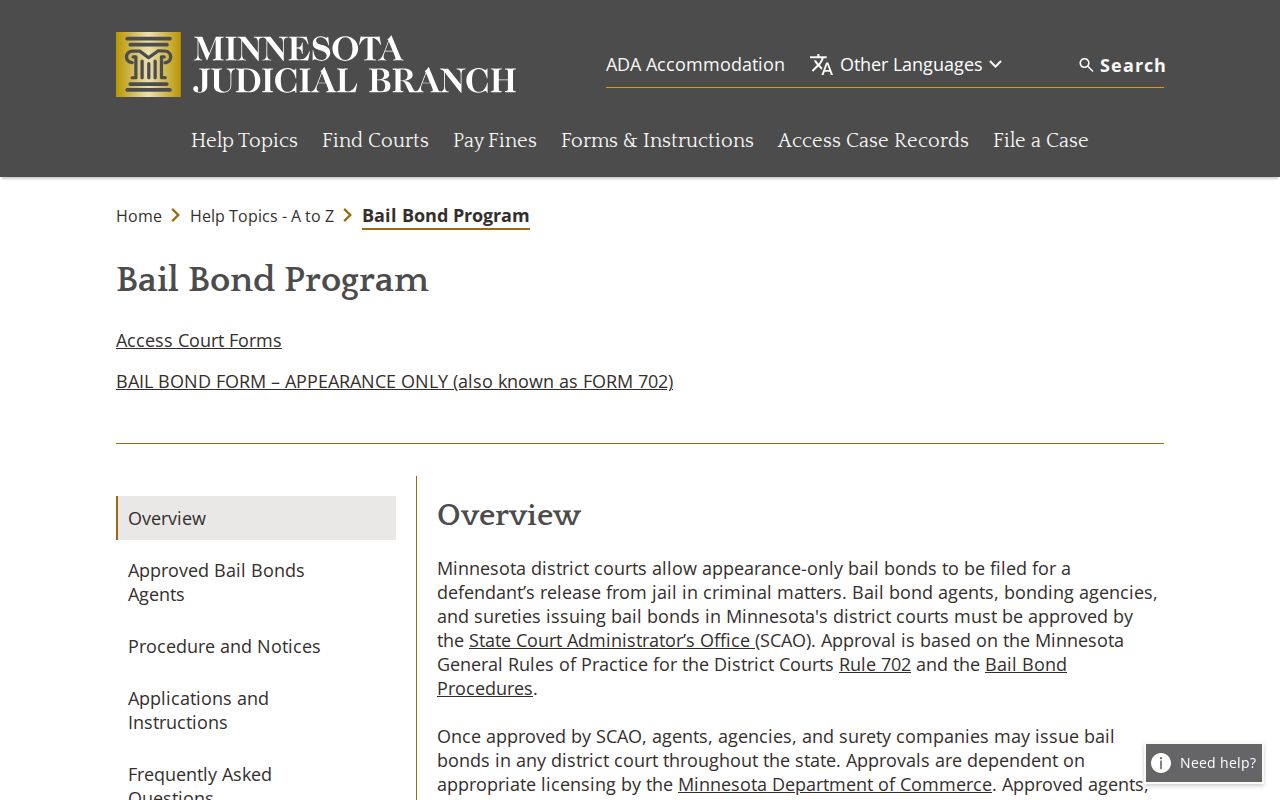
The Judicial Branch's Bail Bond Program page explains how surety agents win approval, while the judge still sets bond terms for the case.
Note: a Minnesota hearing, receipt, or bond posting does not confirm that the court changed the warrant status.
Find Warrants by County in Minnesota
Any Minnesota warrant check runs through the county. The District Court holds the case file there, and the Sheriff's Office handles local service. The seven featured metro counties are the largest population centers in the 2025 estimates; population says nothing about warrant volume. Contact practices differ locally.
Hennepin County
Minneapolis · Largest population center; local court helpline eligibility is limited.
Ramsey County
St. Paul · District Court venue in the Twin Cities metro.
Dakota County
Hastings · Sheriff publishes a searchable county warrant portal.
Anoka County
Anoka · District Court county venue; hosted a local 2026 resolution event.
Washington County
Stillwater · County Court Administration and Sheriff are local contacts.
Scott County
Shakopee · Metro county served through the statewide District Court structure.
Carver County
Chaska · Metro county with a county-specific court and sheriff route.
The directory of all 87 Minnesota counties links to each county destination.
Minnesota Traffic Warrants and License Status
A Minnesota traffic warrant lives in court records. License suspension is separate, run by Driver and Vehicle Services. Section 171.16 limits suspension based solely on certain unpaid fines and requires notice after some failures to appear. Many people then have 30 days to show appearance or payment, subject to exceptions. No statewide Minnesota FTA or license-hold lookup exists. MCRO locates public court cases, and the Court Payment Center handles eligible citations. Payment does not prove recall. Verify the case with the court, and check license status with Driver and Vehicle Services.
| Question | Court warrant or case | License status |
|---|---|---|
| Record | District Court file and agency status | Driver and Vehicle Services record |
| Check | MCRO, County Court Administration, Sheriff’s Office | Notice and DVS status route |
| Next step | Court appearance, recall, bond, or other action | Proof of compliance through court process |
Search by citation number. After a missed date, ask the Minnesota court whether it issued a warrant, and keep any filed orders or receipts.
Minnesota Warrant Events Stay Local
Minnesota has no statewide warrant-amnesty week. Local court events set their own dates, eligibility, and terms. Attending one does not promise a cleared warrant or avoided custody. Winona County lists an event for November 12, 2026. Anoka County held an April 2026 Law Day event for eligible lower-level cases. Verify current details with the host court. The Winona County notice is a dated local example, not a statewide Minnesota warrant process.
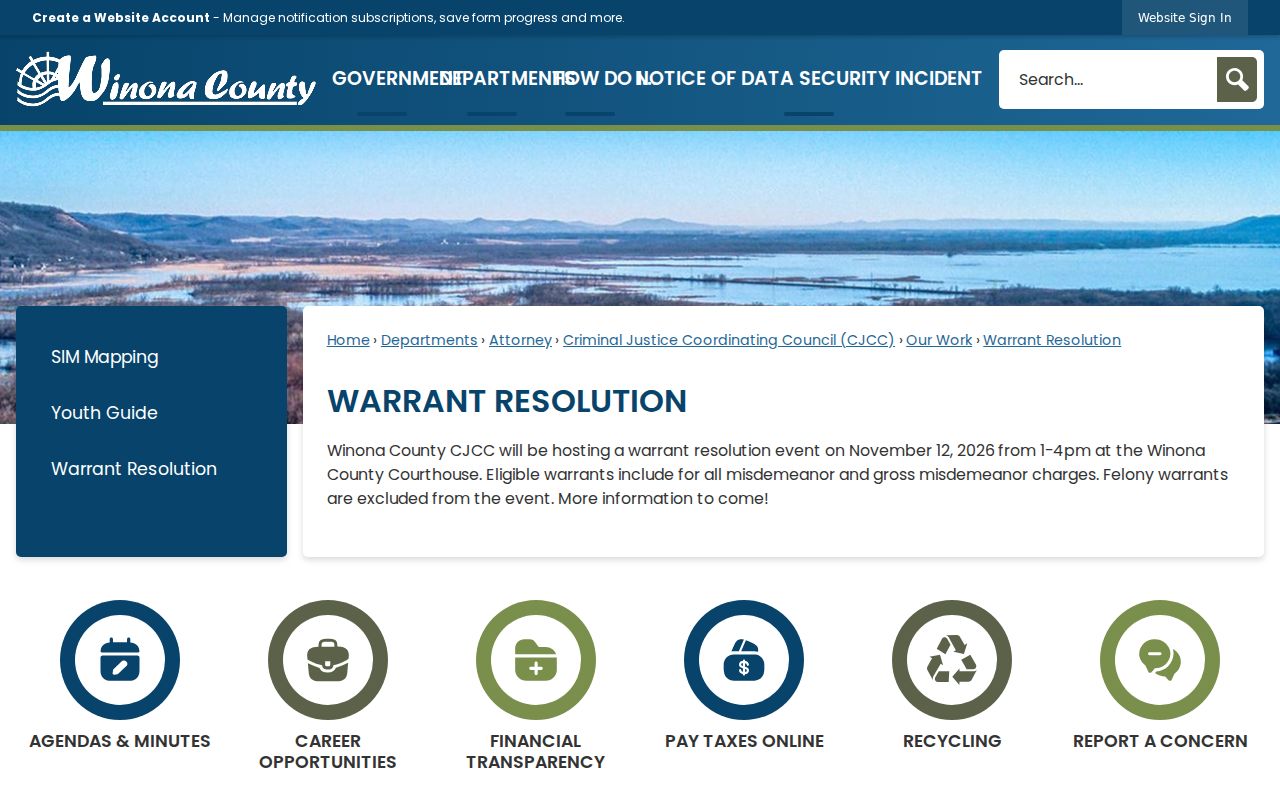
Confirm the event date and case rules first. Otherwise, contact the issuing Minnesota county's Court Administration and Sheriff's Office.